

As a sole trader, you’ve probably thought about your profit before. But there’s another financial concept that’s equally, if not more, critical to keeping your business afloat: cash flow.
Why is cash flow important? Imagine running a profitable business, only to watch it sink because there’s no cash available to cover day-to-day expenses. Cash flow is the lifeblood of any sole trader business, ensuring you can pay your bills on time, buy supplies when you need them, and, of course, pay yourself – after all, that’s why we’re here!
Let’s talk how to master your cash flow and keep your business thriving.

What is cash flow?
Cash flow is literally the flow of cash through a business. Incoming cash includes sales of your products or services, as well as money from tax rebates on your sole trader income, grants for your business, and assets you may have sold, such as equipment. Outgoing cash could be things like the cost of goods sold, buying new equipment, or paying off loans.
Think of cash flow as a snapshot of your bank account in any given period, showing when money actually arrives and leaves (not when an invoice is sent or received). It’s different to profit which generally just shows if you’re earning more overall than you’re spending. Cash flow isn’t like a budget either where you allocate spending – it’s all about real-time cash in and out, and lets you know whether or not you have money in the bank when you need it.
Imagine your cash flow as a tide – money comes in waves and goes out in waves. Managing those tides effectively is what keeps your business afloat.
Positive and negative cash flow
Positive cash flow means you’ve got cash on hand to cover all your financial obligations, from paying for supplies to paying your taxes, as they arise.
Negative cash flow means the literal opposite. This might result from overspending, increased costs or clients not paying you on time. Without sufficient cash at your fingertips, you may be forced into taking out high-interest loans, which can drain your long-term profits. Oof.
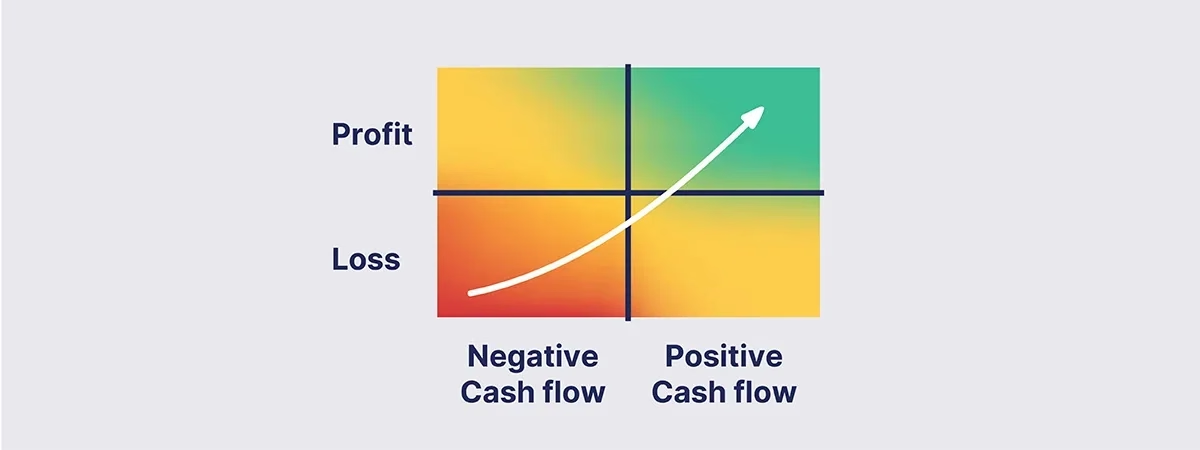
The sweet spot for any sole trader is when your business is turning a profit and you’re cash-flow positive all year round (top right of the quadrant). That’s the dream!
On the flip side, the nightmare scenario is making a loss and being cash flow negative (bottom left). Yikes!
However, there’s a tricky middle ground where you can be profitable but still have negative cash flow (top left). Sounds confusing, right? Here’s the kicker: By the end of the financial year, you might see that you’re profitable because you’ve earned more than you’ve spent. But, if you didn’t have a steady stream of cash coming in throughout the year, or you had some massive outgoings in a short space of time, you wouldn’t have money on hand to cover your daily expenses and buy supplies. This can put your business at serious risk of going under.
Picture this: You’re a furniture maker with a massive £5,000 order – great news! But then you need to spend £2,000 on materials. While waiting for that £5,000 to hit your account, you’re out £2,000 and sitting with no cash in the bank. Sure, you’ll eventually profit £3,000, but right now you’re cash-strapped. How will you keep things running? It’s tough to stay afloat with no cash flowing through your business.
Conversely, you might be making a loss but have positive cash flow (bottom right). This means your cash flow looks good during the financial year, but by year-end, unpaid supplier invoices or being behind on loan repayments might tip you into a loss. Bit of a double-edged sword, right?
How to calculate net cash flow
Managing cash flow might sound like a chore, but trust us, it’s worth it. First, you’ll need to put together a cash flow statement.
A cash flow statement is a summary of all the money that’s come in and out of your business during a certain period. We recommend monthly to keep things practicable.
While there are software solutions that can create this and produce a fancy cash flow report, as a sole trader you may not want the complexity or expense. You can track your cash flow via these easy methods:
Calendar: Simply make a note of your incomings and outgoings on the relevant days. Eg on 20 May, you write ‘£5,000 expected income’, and on 10 June you write ‘bill for £2,000 due’.
Spreadsheets: You can create your own spreadsheet with a cash flow formula, or use a template, like this free one from the British Business Bank’s Start Up Loans website.

Subtract your outgoings from your incomings, and you’ll have a running total of the amount of cash you have on hand at any given point during that set period.
Cash flow forecasting
Think of cash flow forecasting as your business’s crystal ball: It predicts future cash flow so you can plan smartly without any sorcery involved (unless you’ve got a magic wand hiding somewhere!).
For example, if you know May to July is usually your busiest period and you expect more cash to come in during this time, you might decide to ramp up your spending or save some money for slower months – depending on what your forecast reveals about your business’s financial future.
It’s true that predicting cash flow can get a bit tricky. If you run a seasonal business, like making Christmas decorations, you probably have a good sense of when sales will spike. But for those in the creative industries, it’s getting tougher to forecast income. Many clients are tightening their budgets due to inflation, and turning to AI instead of human workers. In these situations, it’s crucial to stay updated on industry trends and adjust your income targets and expenses based on what’s happening around you.
A cash flow forecast allows you to be aware of your likely cash position, spot potential cash shortfalls, and plan for large bills and taxes (which Hnry can help you with).
How to create a cash flow forecast statement:
- Choose a forecast period:
- How far your forecast extends can be informed by your unique situation. Are you planning around seasonality, for example? Think monthly, or quarterly, based on your needs.
- List your expected income during the period:
- Start with how much you have in the bank at the start of your forecast period – this is your opening balance.
- From there, list out all incomings and outgoings throughout the period, from all sources
- Tip: To estimate your sales, check out last year’s numbers and look for patterns. Did sales go up, down, or stay steady? Use this information to tweak your sales forecast accordingly.
- If you’re just starting your business and don’t have historical sales figures, start by estimating all your expenses first. This will give you a clear picture of how much cash you need to generate to cover them.
- List your expected outgoings:
- Cover both regular and irregular expenses (such as annual subscriptions or repairs).
- Calculate net cash flow:
- Subtract your outgoings from your incomings to find your closing cash balance for each period. This is the amount of cash you expect to have on hand at that time.
While a cash flow statement is a historical document, tracking the actual incomings and outgoings in your business as they occurred, a cash flow forecast is a separate report that’s forward looking. You can use it to plan for the future – including if you want to grow your business, or launch a new product.
For bonus points, you can use your cash flow statement to inform your cash flow forecast – what were your expenses like in the same period last year? Did sales trend up, down, or hold steady?

How to improve cash flow so you stay positive
There are a few things you can do as a sole trader to help keep that cash flowing. For example:
Save for slow months: Stash cash away during peak times to cover slower periods.
Get paid in advance: Try to get paid upfront. If this isn’t possible, make sure you clearly define payment terms and chase invoices to make sure you’re paid promptly (or let Hnry do it for you).
Short-term loans: If you need a quick cash injection, some sole traders bridge gaps with short-term borrowing. Options include borrowing money from a friend or family member, or a bank, or a short-term loan company. It’s important, however, to understand the terms upfront, like:
- How long you have to pay back the money before interest rates kick in
- What rate interest will be charged at
- What happens if you default on the loan
In general, short-term loans might be a last-resort situation – try to exhaust all other options if you can!
How Hnry can help
Hnry’s got you covered. Our award-winning app – created specifically for sole traders like you – takes care of your taxes, so whatever lands in your account is yours to spend.
For just 1% +VAT of your self-employed income, capped at £600 +VAT a year, we calculate, deduct, and pay all your taxes and whatnot for you, including:
- Income Tax
- National Insurance contributions
- Student loan repayments
- Private pension contributions (optional)
- VAT (if registered)
… meaning you won’t have to think about any of that. Ever.
Being a sole trader is hard enough. Hnry has your back. Sign up today, stay on top of your cash flow, and we can help you avoid a cash-flow-draining tax bill.